
When US Conservative Institutions take CCP Funding
Can They Avoid a Conflict of Interest?

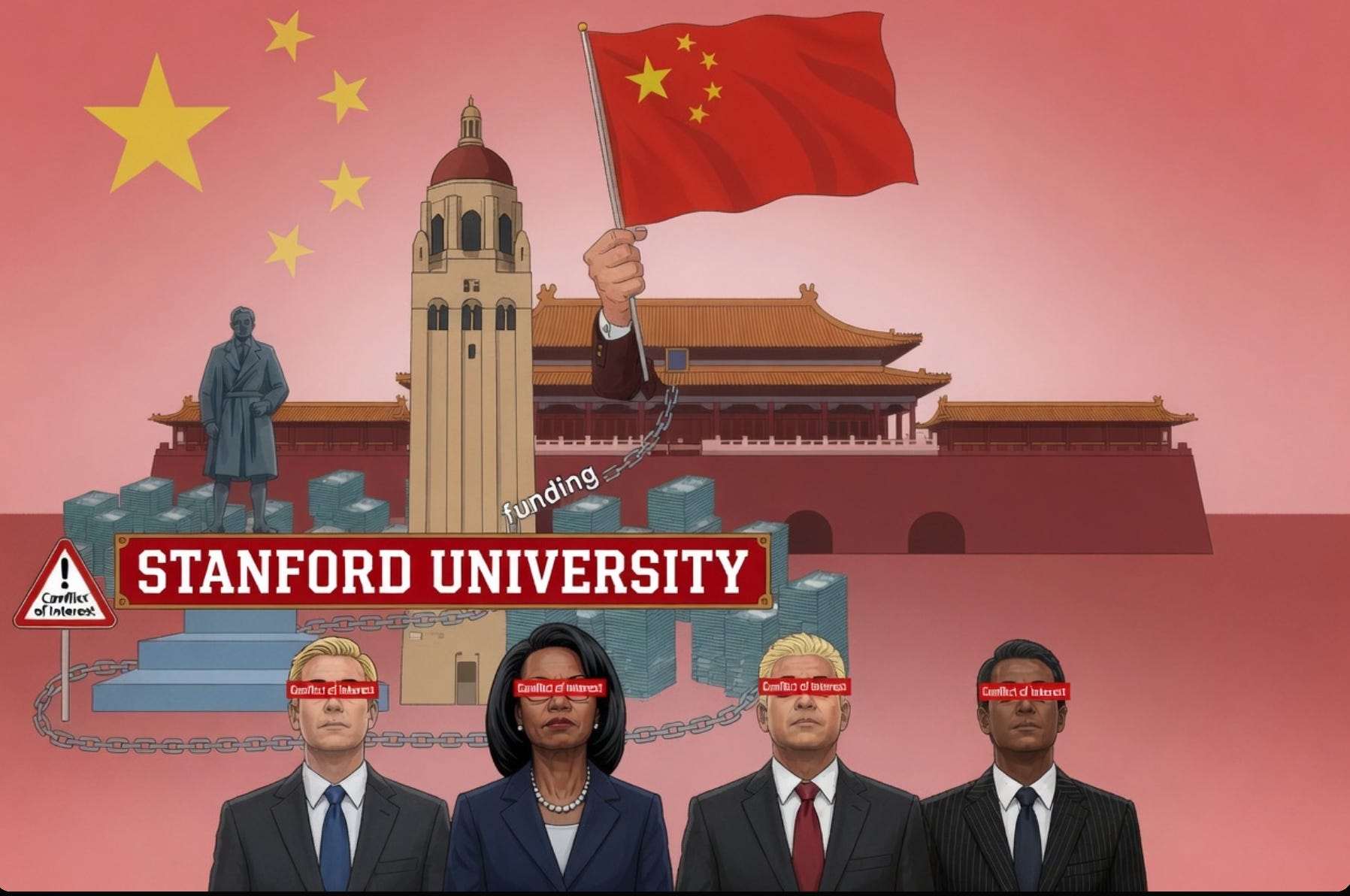
The story is fresh, days old as of early June 2026, and it centers on an iconic institution. The gasp of shock could be heard around the free world. Specifically, it was a Hoover-linked gift from a donor with strong CCP influencer ties, and has triggered a public dispute between the student paper and Hoover leadership. It highlights ongoing tensions over foreign funding at elite institutions. (For primary sources, see the Stanford Review article and Hoover’s response via Newsweek.)
The recent story breaking in early June 2026 comes from an investigative report by the Stanford Review (a conservative student publication), based on a whistleblower leak of Stanford’s non-public foreign funding.
disclosures.stanfordreview.org
Key Details show that Stanford accepted at least $3 million in 2025 from a donor listed as “Chen Yuan” of China.
The gift was recorded as a restricted/directed research gift specifically for work at the Hoover
Institution.stanfordreview.org
The Review links this donor (by name, nationality, wealth, and family ties) to Chen Yuan, a high-level Chinese political figure and son of former CCP Vice Premier Chen Yun.
Chairman of the China Association for International Friendly Contact (CAIFC), described in U.S. government reports (e.g., USCC) as part of the CCP’s United Front Work Department / political warfare and influence apparatus, with ties to the People’s Liberation Army (PLA) political
Broader findings: Stanford has taken tens of millions with estimates of $60+ million in the last decade, with overall Chinese funding in the hundreds of millions over longer periods, from Chinese state-linked entities, companies like Huawei, Tencent, etc., and individuals with United Front ties Hoover Institution’ directly to this specific $3M gift (it was earmarked for directed research there).
Hoover also participates in broader Stanford-China ties and runs major programs on U.S.-China competition, including criticism of CCP influence operations.
Condoleezza Rice, Hoover’s director, strongly pushed back and requested the Stanford Review withdraw the story immediately.
The identification of the donor was called speculative “innuendo.” and emphasized Hoover’s long history of hosting dissidents, archiving anti-CCP materials, and producing research critical of the Chinese Communist Party.
This has sparked debate about whether accepting such funds, even for “research”, creates influence risks at an institution that advises on national security and China policy.
Stanford, like many U.S. universities, has faced years of scrutiny over undisclosed or under-reported Chinese funding, including past DOJ settlements for nondisclosure of foreign ties in federal grants. The issue fits into larger concerns about CCP influence in U.S. academia via United Front work, talent programs, and financial leverage.
Please share this article to help raise awareness of a serious issue in our universities.